
Whey Calf Milk Replacer
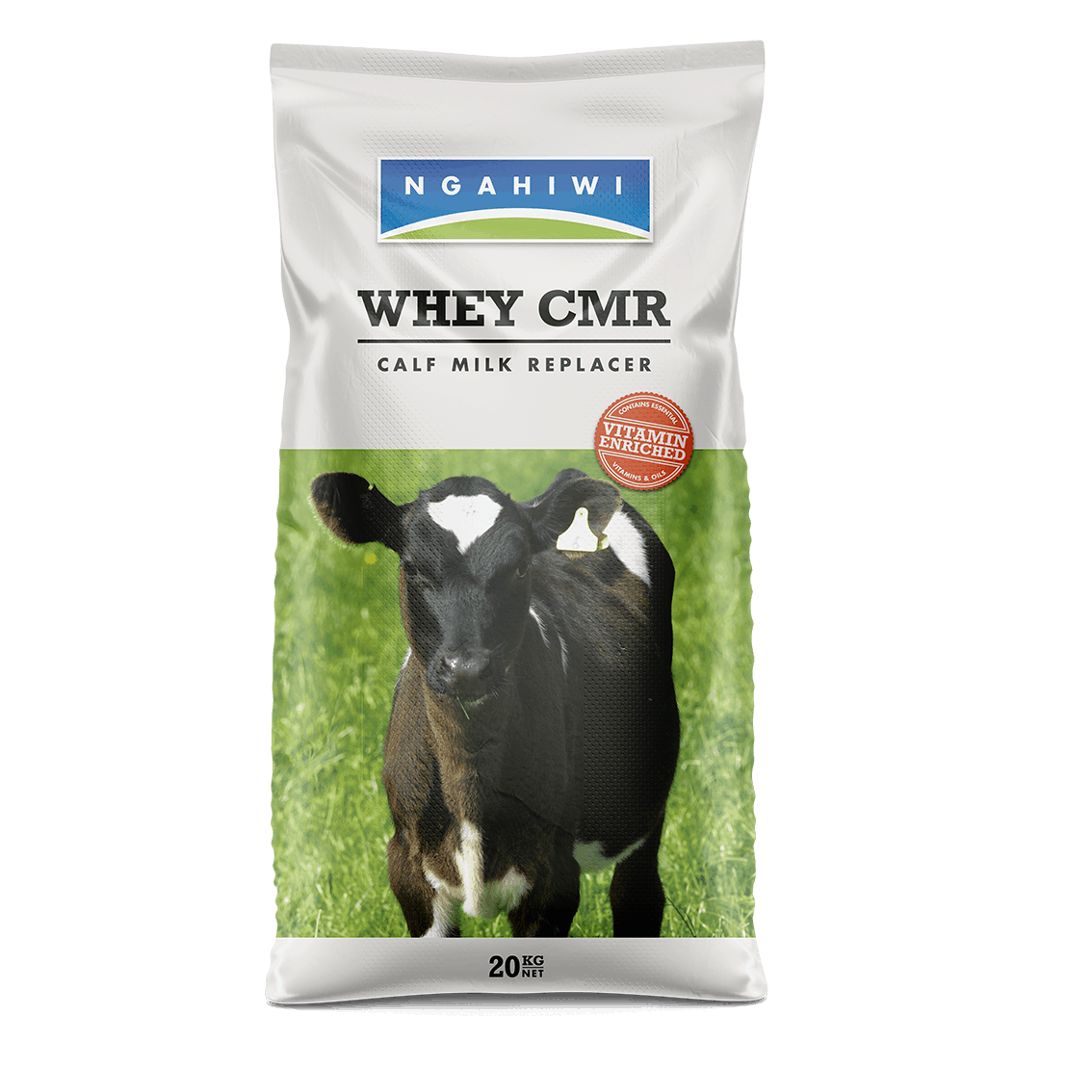
It combines a well-balanced milk-protein & fat-level milk powder with probiotics, prebiotics, essential oils, a vitamin & mineral premix and a coccidiostat to give calves the best start possible*.
Ngahiwi Whey is a non-curding milk powder and we recommend that it is fed from 14 days of age, after calves have had both adequate colostrum and either whole milk or a curding CMR like Ngahiwi Premium.
| TYPICAL PRODUCT ANALYSIS | |
|---|---|
| Protein | 22% |
| Fat | 18% |
| Lactose | 48% |
| Minerals | 8.5% |
| Moisture | 3.5% |
| Definition of typical analysis | |
WHAT OUR CUSTOMERS ARE SAYING

"I have used Ngahiwi’s Calf Milk Replacer for 20 seasons rearing thousands of calves in that time. The product mixes easily and my young calves thrive. Ngahiwi contains as a standard, prebiotics, probiotics and a coccidiostat. Excellent product!"
Chris Coxhead
Bull Farmer, Waitakaruru

John Hathaway
Businessman and Dairy Farmer (Reporoa)
"The kids are fantastic and thrived from day 1. We can safely say that Ngahiwi Premium Powder with all the goodies added is the best product we have used and it sure made kid rearing a breeze"
Deb Henson
Rearing 400 kids (Feilding)
"I rear over a thousand calves a year and always use Ngahiwi to supplement a liquid whole milk rearing program. I like the product, service and good value of their powder. All that you need - a premix, prebiotic, probiotic and coccidiastat, is in the powder. No need to buy expensive extras."